What the New HST Rebate Actually Means — and Why It’s Happening Now
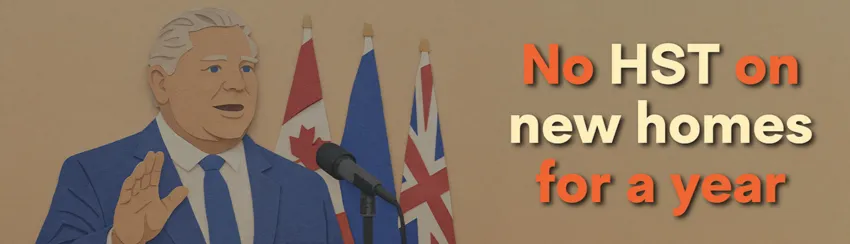
Everyone’s talking about the HST change right now. You’ve probably heard some version of it already. “HST is gone.” “Now is the time to buy new construction.” It sounds big, and in a way, it is. But it’s also being oversimplified. What actually happened is more nuanced, and honestly, a lot more interesting.
On March 25, 2026, Ontario announced that, for a one-year period, the HST rebate on new homes would be expanded to all eligible buyers, not just first-time buyers. That alone is a major shift. For years, meaningful tax relief on new construction was mostly tied to first-time buyers. Now, a much wider group of people can access it, with potential savings reaching up to $130,000 on qualifying homes. On paper, that’s significant. But to understand what it really means, you have to step back and look at how pricing actually works.
If you’ve ever compared resale to brand new, you’ve probably felt this without fully realizing it. A $600,000 resale condo is exactly that. You pay $600,000. A $600,000 brand new condo is not quite the same thing. There’s HST in the background, roughly 13 percent. Sometimes it’s added on top, sometimes it’s baked into the price, but either way, it’s part of the structure. That’s one of the reasons new construction has historically felt more expensive, even when the numbers looked similar at first glance. What this new rebate does is narrow that gap. It doesn’t remove the tax entirely in every case, but it reduces how much of it you actually feel, which suddenly makes new builds look more competitive.
The timing of this change is not random. The new construction market has been slowing down. Condo sales across the GTA have dropped to levels not seen in decades, projects have stalled, and developers have been sitting on unsold inventory. At the same time, buyers have become more cautious. They are taking longer to decide, comparing more options, and pushing harder on price. That combination creates pressure on both sides of the market. This policy is meant to respond to that, by stimulating construction, supporting jobs, and getting projects moving again.
What’s more interesting is how this changes developer behaviour. Not every builder is in a position where they need to sell immediately. Some can afford to wait. With this kind of HST relief in place, it becomes easier for them to hold onto units instead of discounting them aggressively. Instead of lowering prices, some of those units may move into the rental market while developers wait for conditions to improve. It’s a subtle shift, but an important one, because it means buyers may not see the kind of price drops they were expecting.
So is this a good deal? In some cases, absolutely. If you were already considering a new build, this can improve the math and create real savings. But it doesn’t automatically make new construction the better option. Resale hasn’t changed. You can still walk into the unit, see exactly what you’re buying, and often find stronger value, especially when you look at price per square foot. This isn’t about homes suddenly becoming affordable. It’s about making new construction more attractive at a time when it needs support.
And it’s temporary. The expanded rebate is expected to run from April 1, 2026 to March 31, 2027. A one-year window. Enough to create urgency, move inventory, and push decisions forward. After that, the market adjusts again. For buyers, the takeaway is simple. Don’t just react to the headline. Compare what’s actually in front of you, run the numbers, and choose what makes sense long term.